

Recent Blog Posts
The Impact of Divorce on Your Will
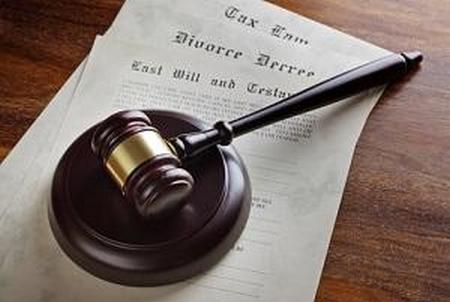 The effects of you divorce are likely to be felt throughout many aspects of your life, often for years into the future. But did you know that that your divorce could continue to affect you and your loved ones even after your death? It could if you are not careful, anyway. Following your divorce, it is important to understand how ending your marriage may impact your plans for dividing your estate.
Enduring Contracts
In certain cases, the terms of your divorce agreement may require you to keep your ex-spouse as beneficiary for certain accounts or investments as a form of security for spousal maintenance or property division purposes. More often, however, you will be free to choose new beneficiaries so that your ex-spouse does not stand to collect money or assets that should be going to another family member. It is extremely important to make such changes directly with the investment company or life insurance carrier or else the contract you signed when you opened the account or began the policy may remain in effect, and could possibly take precedence over your divorce decree.
Improper Lane Usage Traffic Offenses
 A host of Illinois residents have certainly received traffic tickets over their lives, but many people do not realize that improper lane usage is a ticketable offense until they are involved in an automobile accident or are pulled over for weaving between lanes. While improper traffic lane usage is only a petty offense, a citation can have a significant impact on your driving privileges and could result in an increase to your insurance. Furthermore, this traffic offense is punishable by a fine of up to $1,000 and up to two years of court supervision.
Under 625 ILCS 5/11-709, vehicles driving along Illinois highways and roadways that are divided into multiple lanes that are going the same direction must stay in their own lane as best as possible. A driver can deviate from their chosen lane of traffic only once the driver has deemed it safe to do so. Lane changes are allowed in order to pass another driver who is moving in the same direction as you, but may only be performed once the passing lane is clear and you have a safe distance in which to pass the slower-moving vehicle.
Drive Sober or Get Pulled Over Campaign in Full Swing in Illinois
 As fall arrives, Illinois law enforcement, through the partnership efforts of the Illinois Department of Transportation and the National Highway Traffic Safety Administration, have been actively and aggressively implementing the Drive Sober or Get Pulled Over traffic safety campaign, a campaign designed to improve awareness and crack down on drunk and drugged driving on Illinois roadways, according to one report. The central theme of the Drive Sober or Get Pulled Over campaign is that drunk driving is preventable, and as such one of the main objectives of the campaign is to raise awareness of this fact.
During the time period between August 24th and Labor Day on September 7th, Illinois law enforcement was out in force, with more officers patrolling the roadways and exercising a zero tolerance policy when it comes to drunk or drugged drivers on the road. There was also an increase in the number of traffic safety checks and officers focused on issuing tickets for seat belt law violators without exception under the Click It or Ticket campaign.
Sign and Drive Law for Traffic Violations
 Consider the contents of your wallet. If it was stolen, what would be the most challenging thing to do without for a few days? Chances are, you could get by without your credit or debit card and insurance identification cards for a little while until you receive new ones. Your driver’s license, however, is a whole different story. Without it, you would probably struggle to board an airplane, purchase alcohol, or even cash a check. However, for many years, the state of Illinois allowed law enforcement officers to take a person’s driver’s license as bail when citing him or her for a traffic violation. Thanks to a law that went into effect earlier this year, though, the practice has come to an end, and it is important to know your rights and responsibilities.
Implementing Sign and Drive
Just over a year ago, the Illinois legislature and then-Governor Pat Quinn recognized the challenges presented to citizens by having their licenses confiscated as bail. They realized that affecting the way that a person goes about his or her daily life was not appropriate based on relative minor severity of most traffic violations. Thus, in August of 2014, the so-called Sign and Drive was officially signed by the governor, taking effect on January 1, 2015.
Am I Entitled to Spousal Support after My Divorce?
 Under the law in Illinois, children have to right to expect financial support from both parents, regardless of the adults’ marital situation. The same is not true, however, for divorcing spouses. While there may be situations in which spousal maintenance is appropriate, there is no inherent assumption that it will be granted. Instead, in the absence of an agreement either at the time of divorce or prior, such as a prenuptial agreement, the court will examine the applicable circumstances and decide if an order for spousal support is necessary.
Negotiated Maintenance and Prenuptial Agreements
Most aspects of divorce can be settled fairly amicably through the process of negotiation. You and your spouse may be able to reach an agreement regarding spousal support with an arrangement that works for your particular situation. Spousal maintenance provisions can also be included in a prenuptial agreement, created prior to your marriage. As long as such agreements are workable and relatively fair, they are likely to be accepted by the court.
Accused of a Crime: Should I Turn Myself In?
 You should never seek to hide from the police or try and avoid getting arrested when you know you have a warrant for your arrest. Evading arrest, revisiting arrest, and obstruction of justice are all serious crimes in Illinois. Turning yourself into the police when you have been charged with a crime is often a wise move, if done properly.
Difference between Being Accused and Being Charged
You may want to do the right thing, but you are not sure if you are required to turn yourself in or not. If you have been accused of a crime, that is, someone has said that you committed a crime, but you have not been charged with a crime, you do not have to turn yourself in.
You have the right to not incriminate yourself. This means even if the police wish to question you, you can remain silent instead of admitting you broke the law. You should still seek the advice of a criminal defense attorney, but you are a free man or woman.
Was the Police Search of My Car Illegal?
 Every year, a surprising number of people are arrested after having their cars searched. Often, the police find drugs, weapons, or other contraband in the car and then arrest all of the occupants. But, police are not allowed to randomly search vehicles. Everyone in the United States has a Constitutional right to be free from unreasonable searches and seizures.
If you have had you car searched by police, it is important to know if the search was legal or not.
Search and Seizure Law Basics
The Fourth Amendment to the U.S. Constitution gives you the right to not have your property searched or taken unreasonably. This means that the police must either have your permission, a warrant, or there must exist some special circumstance, before they can search your property, including your car.
If a search is found by a court to have been illegal, all evidence gathered from that search will be inadmissible in court. This is sometimes called "fruit of the poisonous tree". If you give the police permission to search you vehicle, however, the search will almost certainly be legal.
Traffic Offenses: Tickets for Failing to Stop
 In Illinois, there are a number of different traffic offenses that involve a failure of the driver to stop when stopping is appropriate or required. Some of the most commonly cited traffic offenses of this nature include failure to stop at a railroad crossing, failure to stop for a school bus and failure to stop for pedestrians. If you receive a citation for any of these offenses, an experienced traffic offense lawyer can help you fight these alleged violations.
Failure to Stop at a Railroad Crossing
Failure to stop at a railroad crossing is governed by 625 ILCS 5/11-1201. Under the law, a driver must stop at least 15 feet from a railroad track crossing when:
- A railroad crossing gate is lowered;
- Electric or mechanical signage at a railroad crossing indicates that a train is coming;
- A train sounds its horn, signaling that it is approaching the crossing;
Marital Property Includes Retirement Accounts
 According to the law in Illinois, nearly all property acquired by either spouse during the course of marriage is considered part of the marital estate and is subject to division in the event of divorce. This generally includes all wages derived from employment, even if those funds have been invested into a retirement account set up in the name of just one spouse. The same is true for a pension, as its value is attributable to the working effort of a spouse, which, in the context of a marriage, causes the asset to become marital property.
All, Some, or None?
If you have been actively saving for retirement for many years, it is very possible that your retirement account, including a 401(k) or an IRA, existed long before your marriage was even a consideration. The contributions and the resulting increase in value of the investment made during the marriage are part of the estate. The contributions and value increases prior to the marriage or after your divorce are not included in the division of property process.
False Accusations of Domestic Violence: False Claims of Stalking and Harassment
 Some instances of domestic violence are actually based on fact. One person in the relationship is overly jealous, jilted or has other issues that make them a violent person, and they act out against their spouse, significant other or partner in a physically abusive, controlling, or manipulative way. But there are many cases where allegations of domestic violence are false, and when false allegations of domestic violence are made, it can have serious impacts on the life of the person who stands accused.
When presented with the idea of domestic violence, many people automatically think of domestic battery, where one spouse, significant other or partner physically abuses the the other person in the relationship. But domestic violence can also include stalking and harassment.
Stalking
For example, stalking is considered a form of domestic violence because stalking occurs when one person (i.e., the alleged stalker) knowingly acts in a way towards another (i.e., the alleged victim) that makes the alleged victim scared for their safety. Stalking is codified in 720 ILCS 5/12-7-3.

Schedule Your Free Consultation
Arlington Heights Office 3030 Salt Creek Lane, Suite 120 Arlington Heights, IL 60005 Phone: 847-253-3100


At Cosley Law Office, we represent clients in Illinois, including the cities of Rolling Meadows, Schaumburg, Palatine, Arlington Heights, Mount Prospect, Buffalo Grove, Barrington, Elk Grove Village, Inverness, Wheeling, Long Grove and Mundelein, as well as Cook County, Lake County, DuPage County and throughout the Chicago, IL, metropolitan area.
Results listed are not a guarantee or indication of future case results.

© 2026 Cosley Law Office
3030 Salt Creek Lane, Suite 120, Arlington Heights, IL 60005
847-253-3100